
Ownership and Medical Oversight
Who can own a VIO Med Spa?
In many states, you do not need a medical license to own a med spa business. What changes from state to state is how the business is structured, and who controls the medical decisions inside it.
Takes less than 1 minute


Ownership
A med spa is two things at once
A med spa is a business, and it is also a place where medicine is practiced. Injectables, filler, many lasers, device-based microneedling, and prescription products are treated as medical services in most states. That medical side is what state law watches most closely.
Many states follow a rule called the corporate practice of medicine (often shortened to CPOM). In plain terms, it means medical decisions belong to licensed clinicians, not to a business or an unlicensed owner. The goal is simple: no client’s care should be shaped by a sales target or a business owner’s preference.
States generally land in one of three places

Direct ownership allowed
A non-clinician can own the spa, as long as licensed providers make every medical decision and the required physician oversight is in place.

Two-entity structure
The medical practice must be owned by a physician (or a physician-majority professional entity). The business owner owns a separate company that handles non-clinical work, such as the lease, staffing support, marketing, and billing services.

Mixed or unsettled
The rules are partly written, partly set by board opinions, or still developing. These states need the closest legal review.
Many VIO owners are not clinicians
VIO owners include business operators, multi-unit franchisees, investors, and clinicians. A non-clinical background is not a disadvantage. What matters is that each side of the spa has the right owner, and that the line between them holds every day, not just on paper.
Regulators focus on structures that look correct on paper while business decisions quietly drive clinical ones. A good structure is one where the Medical Director could explain, at any time, that every treatment decision was a clinical one.
Legal caveat: This section is a general overview, not legal advice. Your entity structure, ownership percentages, and any management agreement must be set up and reviewed by a healthcare attorney licensed in your state. Many states also restrict fee-splitting between physicians and non-physicians, which affects how management fees can be written.

The business side (the owner’s lane)
Lease, build-out, and equipment purchasing
Hiring and managing non-clinical staff
Marketing, pricing, and client experience
Finance, scheduling, and operations

The clinical side (the licensed providers’ lane)
Who is a good candidate for treatment
Treatment plans and orders
Clinical protocols and delegation
Chart review and complication management
The Medical Director
What a Medical Director does
A Medical Director is a licensed physician who takes professional responsibility for the medical care delivered at the spa. It is an active clinical role, not a name on a contract.
The exact duties depend on state law, but a Medical Director typically:
Sets and approves the clinical protocols the spa follows
Delegates treatments to qualified providers, and supervises or collaborates with them as the state requires
Confirms each provider is trained and licensed for the services they perform
Makes sure every client is properly evaluated and has a valid treatment order before treatment begins
Reviews charts on the schedule state law sets
Is available for questions, complications, and adverse events
Oversees how medications and devices are stored, handled, and documented
Why “active” matters: When oversight breaks down, regulators look first at the Medical Director’s real involvement. In Texas, the Medical Board found that a med spa’s medical director was based more than 100 miles away and had visited the practice only three times before a client died after IV therapy there. That case led to Jenifer’s Law (Texas HB 3749), which tightened who may order and delegate elective IV therapy, effective September 1, 2025 (AmSpa, Polsinelli). The lesson applies everywhere: oversight has to be real, documented, and close enough to work.


What VIO Requires
Standards every VIO spa meets
Every VIO spa meets these standards, in addition to whatever its state requires. Where a state rule is stricter than a VIO standard, the state rule wins.
In place before opening
A Medical Director is engaged and documented on the opening timeline, well before the first client is treated.
Licensed and eligible in your state
The Medical Director holds an active license in the state where the spa operates and meets that state’s eligibility rules, such as training, distance, or supervision limits.
Written agreements
There is a written agreement between the owner and the Medical Director, plus the delegation, supervision, or collaborative agreements state law requires for each provider.
A clear line from order to treatment
Every treatment traces back to an evaluation and order from a provider who has a documented relationship with the spa and with the person performing the treatment. Outside services that sell exams or orders do not replace the spa’s own Medical Director.
Documented, ongoing oversight
Chart review, on-site presence, and availability happen on the schedule your state requires, and are recorded in VIO’s systems, including incident and event reporting and controlled substance sign-offs.
Continuing education
Medical Directors take part in VIO’s clinical education, including monthly webinars led by VIO’s Chief Medical Officer, Dr. Alan Durkin.
Medical Oversight
How VIO supports owners with medical oversight
VIO’s model is simple: each spa has its own Medical Director, who leads the clinical side, and VIO gives that team the standards, tools, and education to do it well. VIO supports medical oversight. It does not replace it.

Franchise Owner
Engaging a qualified Medical Director, keeping the right agreements in place, staffing the spa, and giving clinical leaders the time and resources to do their job.
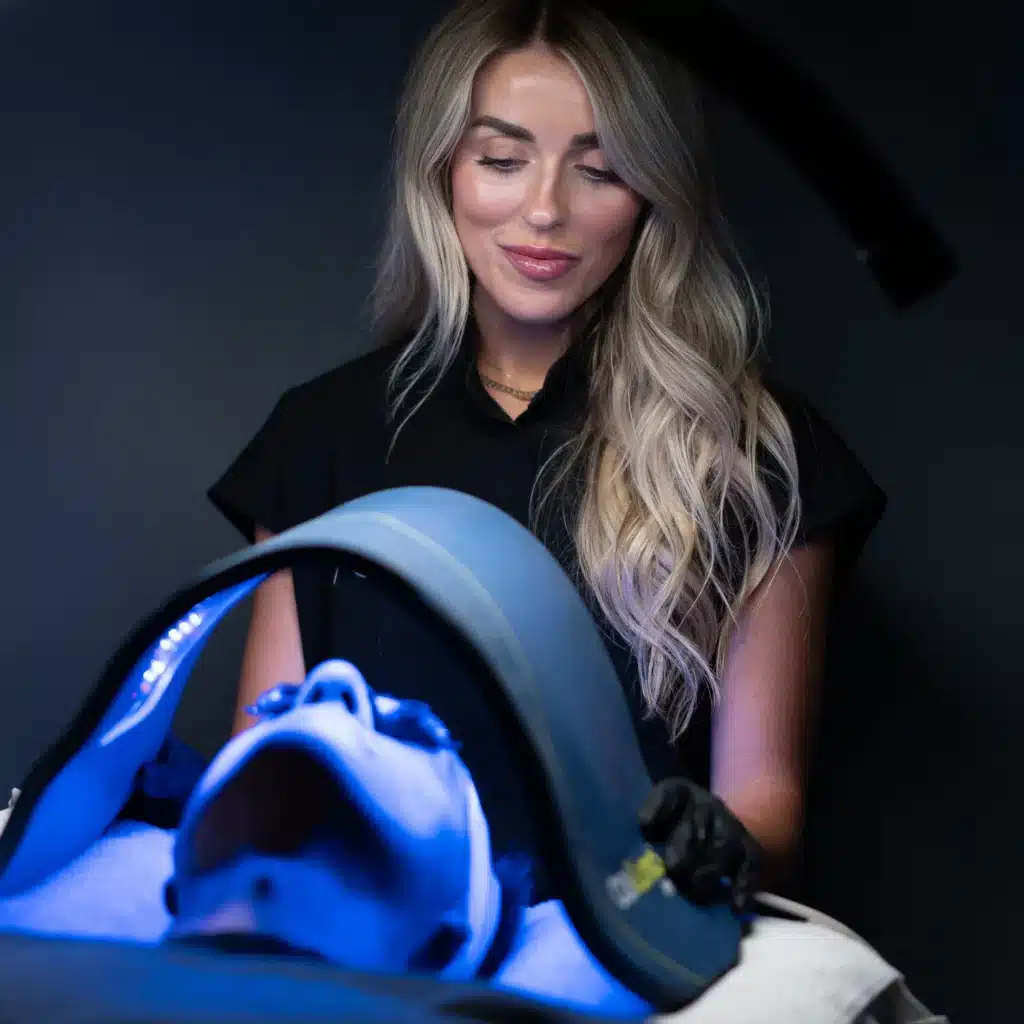
Medical Director and licensed providers
All clinical decisions: evaluations, treatment orders, protocols, delegation, supervision, chart review, and complication care.

Franchisor
Brand-wide standards, policies, training, compliance tools, and a team that answers questions and tracks regulatory change.
What That Support Looks Like
From first conversation to ongoing oversight
What VIO does not do: VIO does not practice medicine, make treatment decisions for your clients, or act as your lawyer. That line is deliberate. It keeps clinical judgment with your licensed providers, where state law places it, and it keeps your structure sound.
Before you sign
Our team walks you through your state’s ownership and oversight rules, so you know what your spa will need before you commit.
While you build
Medical Director requirements are built into your opening timeline, with checkpoints along the way. You receive the VIO Readiness Playbook, state-specific guidance, and a clear list of required documents, including your Medical Director agreements, your attorney engagement, and your insurance.
When you open
Your team works from the VIO Policy Handbook and Regulatory Handbook, with policies and checklists available in one place on the VIO Compliance Dashboard. Training, professional licenses, and incident reporting are tracked in MedTrainer, so oversight is documented as it happens, not reconstructed later.
As you grow
Medical Directors join monthly oversight webinars with VIO’s Chief Medical Officer. The Compliance team tracks new laws and board rules in every state where VIO operates, and lets you know when something changes for your spa.
State Rules
Why requirements differ by state
There is no single national med spa license. Each state regulates med spas through its own medical, nursing, and pharmacy boards, and sometimes its cosmetology board and health department. Those rules were written at different times, for different reasons, and many are changing quickly.
What tends to vary:
Who can own the spa, and whether a two-entity structure is required
Who can serve as Medical Director, and how close or available they must be
How nurse practitioners, physician assistants, and nurses are supervised or collaborate
Which provider types may perform specific treatments, such as microneedling or laser services
How and when a client must be evaluated, and who must sign the treatment order
Special rules for certain services, such as IV therapy, and even for the words a spa may use in its name
The same spa, with the same services, can need a different structure and a different oversight plan in each of these states.
A few examples
California
Corporations cannot practice medicine; physicians must hold the majority of a professional medical corporation.
Source: Cal. Bus. & Prof. Code § 2400; Cal. Corp. Code § 13401.5
Texas
Elective IV therapy has its own ordering and delegation rules under Jenifer’s Law.
Source: Texas HB 3749 (2025), Polsinelli summary
Utah
A facility may call itself a “medical spa” only if a physician or nurse practitioner is on the premises while cosmetic medical procedures are performed.
Source: Utah Code § 58-1-507
Georgia
Board rules set specific expectations for physicians who delegate cosmetic procedures, including documented oversight.
Source: Ga. Comp. R. & Regs. ch. 360-32
How We Help
How our team walks you through your state
If you are considering a VIO in your state, start with a conversation. We will walk through what your state requires, how the Medical Director role would work for your spa, and what the path to opening looks like. Want to see where VIO is opening and what it takes to get started? Explore available markets and the investment overview.
Start with your market
We confirm the state, and the services you plan to offer.
Brief you on your state
Our Compliance team explains, in plain language, the ownership, Medical Director, supervision, and scope-of-practice rules that apply to your spa, with the statutes and board rules behind each one.
Connect it to your attorney
Each VIO owner engages a local healthcare attorney. We give you the issues to bring to that attorney, so your legal time is focused and efficient.
Build it into your opening plan
State requirements become dated steps on your opening timeline, so nothing is left to the last few weeks.
Stay with you after opening
Laws change. When a rule in your state changes, we tell you what it means for your spa and what, if anything, needs to change.
Common Questions
Ownership and medical oversight, answered
The Next Step
Start the conversation
Tell us a bit about your background and your state. A member of our franchise development team will follow up personally.
This is not an offer to sell a franchise. Franchise offers are made only through a Franchise Disclosure Document. See footer for full disclosure.
VIO Compliance is not a legal firm, and nothing on this page is legal advice. Prospective and current franchisees should direct all legal matters, including entity structure, ownership, and Medical Director agreements, to a local healthcare attorney licensed in their state.
This is general information current as of November 4, 2026. State laws and board rules change often. A franchise offer is made only through VIO’s Franchise Disclosure Document, as required by the FTC Franchise Rule (16 CFR Part 436), and this page does not modify or add to that document.